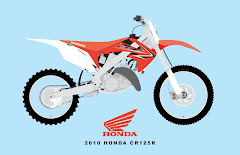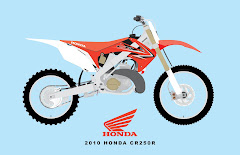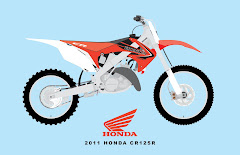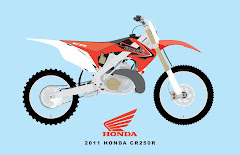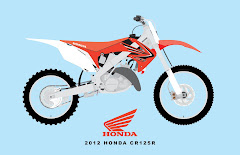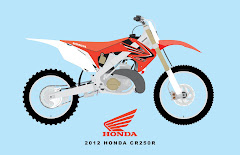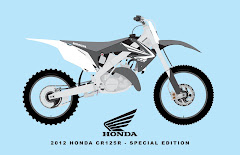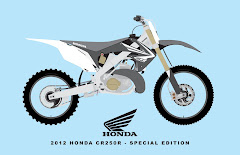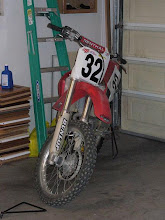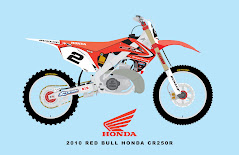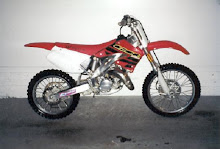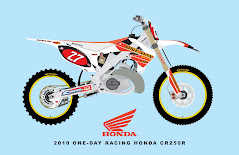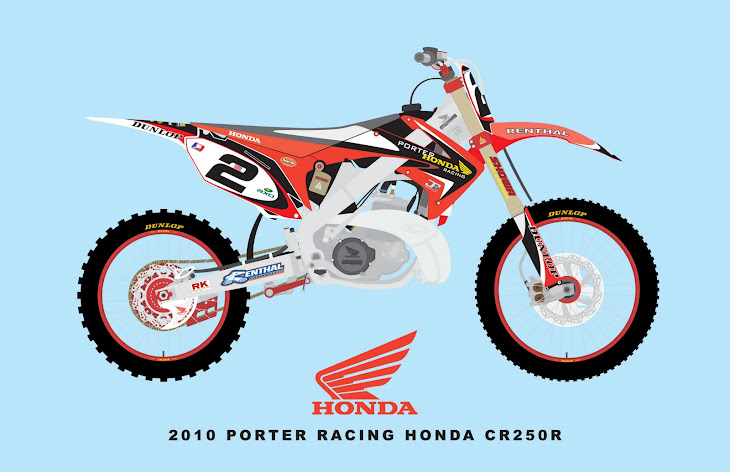
2010 PORTER RACING HONDA CR250R

2010 PORTER RACING HONDA CR250R

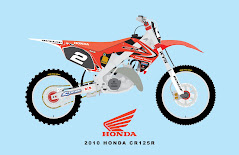
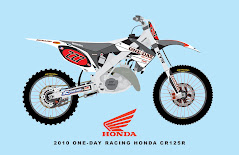
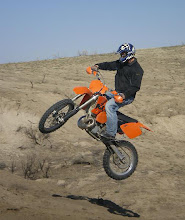
2000 HONDA CR125R

2000 HONDA CR125R

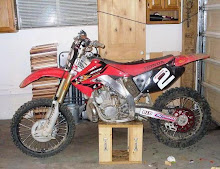
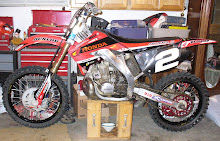
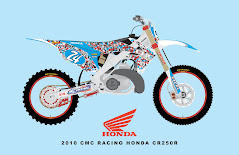
2004 HONDA CR250R

2004 HONDA CR250R

Friday, March 26, 2010

Pucker Up, It's Powerful

If you've been riding on the same brake pads for more than a couple years you're likely not riding enough, or you just don't use the brakes. If so, skip this. Otherwise, you'll be interested to know what kind of replacement pads to put on your bike.

Galfer brake pads are high quality pads available at most dealerships and Web sites. They offer two basic types: carbon or sintered metal. The difference between the two is broken into two categories of riding conditions: hot, dry riding climates where there's a high potential for brake fade (carbon), or rough riding climates where mud and sand are present, but not as likely to experience drastic brake fade (sintered metal).

Anybody riding a Honda CR or CRF from 2002 to present knows how quickly the rear brake fades after hard braking. The minuscule size of the caliper and pads are prone to fade in a short amount of time. For this reason I purchased a set of front and rear carbon pads for my 2004 Honda CR250R. After replacing the front tire and completing a top-end rebuild, my first experience with Galfer carbon pads was a thrilling one. I still have the proof of their power protruding from the palm of my right hand in the form of a small piece of asphalt embedded in my skin.

Two years ago I was cruising my bike up and down the cul-de-sac to test out my top-end work. I was in third gear and did a wheelie as I was heading up the street. After I brought the front end down I tapped the front brake, with the new front tire and carbon pads. Prior to having replaced the brake pads, there wouldn't have been any problem with this. The old pads were worn and provided a very progressive braking. To be brief, my new front carbon pads bit hard into my 240mm Honda rotor, and I did a perfect imitation of Superman flying through the air.

I contemplated my predicament as I sailed through the air, thanking the heavens that my mother was out of town at the time. To this day I'm sure she's convinced that my bike is a conduit to the gates of hell. I digress. I flew up and over my Renthal Twinwall handlebars and straight into the cheese-grater-like devil know as asphalt. I skidded and rolled and somersaulted to a stop, gracefully ending on my feet. My bike lay on its left side, spinning its rear tire and shut off.

I spent the next three hours at the local hospital as they meticulously (though at the time it seemed more haphazardly than meticulously) scraping and cleaning my fresh road burn wounds and examining my right arm with their X-ray. The final diagnosis was a minor radial head fracture in my right arm, and lots of road burn on both my palms, left elbow, left rear shoulder and left thigh. The one irony about the whole thing is that the lowest section of road burn on my body occurred on my left hip. My legs and head remained unscathed.

My bike received a wicked dent and scrapes to FMF Fatty pipe. A triangulated section of the left-side handlebars was ground away after the grip and clutch lever were chewed up. The front fender got a nice set of skid marks, as well as the left side panel. Luckily, I had an extra set of grips on hand and an FMF SST pipe, so they replaced the damaged goods.

The scars are a nice reminder to me of the pucker power of Galfer carbon brake pads. If you're looking for bite, I'd recommend them to you with a smile. Just make sure you're prepared to stop NOW.

Wednesday, March 24, 2010

Dunlop D756 Tires Still For Sale

For any of you who've experienced the impressive handling characteristics of the sadly discontinued Dunlop D756 intermediate/soft terrain tire, all hope isn't gone. There are still places where you can find discounted new tires for sale, and I'm not referring to Ebay.

Check out the deals Rocky Mountain ATV/MC is having on their Dunlop D756 inventory. Click here to see what they have in stock.

I've been frequenting Rocky Mountain ATV/MC's Web site since 2005. They have a great selection of off-road products and very good service. You can't go wrong with them.

Monday, March 22, 2010

Don't Forget to Jet

As the 2010 riding season starts to creep into view, I'm reminded of an experience I had regarding jetting. Actually, it was my lack of jetting knowledge that caused the problem. Let me explain.

I was riding with my brother, cousin and friends in late October of 2007. I had purchased my 2004 Honda CR250R just four months prior, when the average temperature throughout the day is in the mid nineties. When I'd bought my bike it was already jetted and didn't need any adjustments. Where I come from, riding from the months of June to September doesn't require any major jetting adjustments, other than an occasional half turn on the air screw.

But late October in eastern Idaho is different. The temperature is at least ten degrees cooler than in Utah. Besides the obvious, the temperature when we were riding was somewhere in the fifties, which was too cold for my jetting setup. Although I didn't realize it at the time, my bike was running too lean. It would start after a million kicks and idle high for a while, then it would be okay. But after fouling three spark plugs in a matter of a few hours, I didn't know what to do. I didn't have any main or pilot jets, or any needles for my carburetor.

The lesson I learned was how important awareness is in the sport of motocross. Knowing the temperature outside - or where ever you may be riding - is vital to a clean, powerfully running engine. Additionally, knowing the altitude of where you ride is important. The higher the altitude, the thinner the air is. The thinner the air means the leaner you need to go on you jetting.

Hopefully you have been out already on your bike. Up here in Rexburg, Idaho, it snowed today. Needless to say, I still haven't been able to ride yet. It's a sad, sobering day today. But the day will shortly come that I'll be riding my bike instead of writing about it. Have fun!

Tuesday, March 16, 2010

Setting a Trend

It's easy to find a trend in every aspect of your life. That's a simple fact. From clothes to hair to colors to cars, there's a plethora of trends you can follow. The idea of trends is ubiquitous, and rightfully so.

We, the people of today, often have the urge to fit in with the status quo. This isn't a bad thing, usually. While this isn't a general statement, fitting in with the status quo seems to be built into our process of thought. We don't like sticking out unintentionally in a crowd. It fights our natural instinct of wanting to be socially acceptable. Now, sticking out intentionally is a different thing.

Among the countless trends in society today, there is a particular trend that seems to stand out. Teenagers and young adults seem to dress with bright, often uncoordinated color combinations, sporting styled hair that leaves the impression they've forgotten how to use a mirror. The statement it seems to make, a fair one from my perspective, is that they want to stand out. Their apparent desire to be one-of-a-kind in their apparel and appearance shrieks from their eye-catching clothes. The bold colors and quirky hair style speak loudly, but not in a way that these "modern" people may have considered.

Go outside and start counting how many of these colorful youngsters pass you. In a matter of minutes you'll realize how these colorized and accessorized people, in their attempts to stand out, fall into a non-distinguishable canvas of color. The reason for this isn't because they picked the wrong colors or hair styles. On the contrary, it's because so many of them pick the right colors and hair styles. They blend in with each other. In their attempts to stand out they mistakenly blend in because the other million 14 to 22-year-old youngsters are wearing nearly the same thing. I'd like to compare the current four-stroke trend with the current trend of colored clothes and haughty hair styles.

Motocross is a fashion statement, whether you're riding red, blue, orange, green or yellow. Ten years ago only one of the "Big Five" (Honda, Yamaha, KTM, Kawasaki andSuzuki) motocross motorcycle companies was producing a four-stroke motocross bike (Yamaha). Today, all five of the "Big Five" produce motocross four-strokes. And only two of the five still produce two-strokes. Ironically, the "Big Five" company that first produced the four-stroke motocross bike (Yamaha) is one of the two that still produces two-strokes.

What caused the four-stroke trend? There are a million possible reasons why. Four-strokes don't use oil in their gas, so they don't pollute the air like two-strokes. Four-strokes are more powerful bikes than two-strokes. Four-strokes don't have to have engine repairs as often as two-strokes. I could keep going, but won't.

Ultimately, any person that traded out their two-stroke motocross bike for a four-stroke is the reason why the trend changed. Bundles of used two-strokes flooded the "for sale" market when the four-stroke flood gates opened less than ten years ago.Granted, the professional motocross world is centered on four-strokes, and there are some reasons for that. An obvious reason is because a 450cc four-stroke, which ended the 250cc two-stroke for Honda, Kawasaki and Suzuki, has more power than a two-stroke. If you're racing, you'll be hard pressed to find somebody that doesn't want more power. Simple enough. Also, a 450cc four-stroke offers more overall horsepower and torque than a 250cc two-stroke. Of course. It has nearly 200 more cc's.

I dare say the times haven't changed so much as they way in which we express ourselves has changed. The shift in motocross manufacturing is a result of that change. Despite the ever-changing trends, one trend that won't ever die is that of two-strokes. My reason? Most two-stroke fans have counted the costs and benefits of their decision, and they refuse to yield to the dominant four-stroke industry. Just remember what I've said the next time you have your valves replaced on your four-stroke motocross bike, because it may be the last time you can afford it.

Friday, March 12, 2010

MXA Explains Motocross Front-Wheel-Drive and Rear-Wheel-Drive

Here's a question for you: Have you ever watched a four-stroke motocross bike in a turn? You may have noticed how, in most cases, it seems to turn like you'd expect a motocross bike to turn. That's pretty simple.

How about a two-stroke? Have you seen how a two-stroke slides around turns like Vin Diesel driving his '70 Chevelle in Fast and Furious? It seems like the rear tire wants to go faster than the front tire, which isn't far from the truth.

When comparing the turning characteristics of two-stroke and four stroke motocross bikes it's apparent that they're in different ball games. They don't turn the same for a few different reasons.

Motocross Action Magazine explains the differences. April 2010 issue, "Handling: Two-Stroke or Four?" Just flip to the glossary and click on the article.

Tuesday, March 9, 2010

Get a Grip, For Crying Out Loud

Your hands are a key part of your life. Just think about the countless things you do with your hands every day, often without really having to put much effort into the thought. Your hands make your breakfast, lunch and dinner. They steal a small snack in between your big meals. They meticulously wash, comb, straighten, curl and complete your hair every day, if you're into that sort of thing.

One of the best and most powerful visual of hands can be seen on the ceiling in the infamous Sistine Chapel. Michelangelo's depiction of God and Adam, known as the "Creation of Adam," tells the story of God creating Adam, signifying the beginning of human civilization. This timeless work of art tells not only a thousand words, it tells millions of words with its colorfully vivid grace.

Hands deserve a token of gratitude every once in a while, especially for motocrossers. Blisters, calluses, cuts and scrapes are what his hands know. And if you've owned a Honda motocross bike from the last decade with stock grips you know how unforgiving hard grips can be, even on the roughest and toughest of hands.

The grips on your bike can be your best friend or worst enemy. It doesn't take a surgeon to describe the effects bad grips can have on your hands. After pounding a few laps through your local whoops will be more than enough to know whether or not your grips are what your hands want.

Here's a quick explanation of what to look for when considering replacing your worn out grips:

1.) First and foremost, check the size of your hands. You can go to your local dealer and try on a pair of gloves to see what size you are. Grips have different diameters, so a thicker grip may not be suitable for a youngster. Most grip packages can be opened and closed without having to tear it apart, so ask your local dealer if you can test a few styles.

2.) Consider how often you ride. If' you're a dedicated daily rider, then your hands are more than likely less sensitive to grip density (hard, medium or soft). However, you're probably more aware of grip pattern and its role in your ability to stay hooked to your handlebars. Less frequent riders may consider using a medium or soft density grip that are more forgiving and less prone to causing - or increasing - blisters and calluses.

3.) You know how hard or how fast you ride. Speed greatly affects how well your grips work, so make sure to account for your fastest and slowest speeds. Your grips shouldn't make it harder to go fast, and they certainly shouldn't make you cry when you're done riding.

4.) Most grips are not expensive. If worst comes to worst and you can't decide what best suits you, buy a pair of grips and give them a try. If they're not what you want, get rid of them and try a different pair. Just make sure to put the more flimsy grip on the throttle and the thicker grip on the opposing side.

5.) Make sure to buy good grip glue. Renthal makes a quality grip glue, as well as Pro Taper. Both offer great tack and longevity. The one difference is the Renthal glue is colored, whereas the Pro Taper grip glue is transparent.

FMF's Two-Stroke Dedication

Flying Machine Factory, known as FMF, is dedicated to keeping two-strokes on the tracks and in the hills of the world. Since its start in 1973 FMF has set itself apart as a leading manufacturer of motorcycle and ATV exhausts and accessories.

FMF started when two-strokes ruled the motocross world, and despite the dramatic market change to four-strokes it continues to produce performance two-stroke parts.

Take a look at FMF's 2010 parts catalog to get a full view of their quality products. Here's just a little bit of what FMF has to say about two-strokes:

"If you're already a dedicated gas mixer and are looking to get even more bang for our buck, here are five ways to get more efficient performance out of your 2-stroke program without breaking the bank.:

"1. SKIP THE EXOTIC MOTOR MODS - In the search for more power, many 2-stroke owners will go to the ends of the earth (not to mention the ends of their credit limit) to pump up the performance of their machines. . .

"2. ARMOR UP - If you regularly ride on rocky or rugged terrain, chances are pretty good that your motorcycle is going to take a beating. . .

"3. QUIET DOWN - Loud silencers annoy people. Annoyed people call the police. The police can write tickets. Tickets cost money. Money pays bills. Do you see the connection?

"4. MAXIMIZE YOUR PONIES - It's a fact that the manufacturers spend outrageous amounts of money when developing new motorcycles in order to ensure that every bit of available power is put to the ground. . ."
"5. KEEP RIDING A 2-STROKE - The 2-stroke versus 4-stroke debate may never be settled, but nobody can deny the fact that 2-strokes are easy to maintain, cheap to fix and a blast to ride. . ."